Fluorescent Fiber Optic Temperature Measurement
Fluorescent Fiber Optic Temperature Measurement
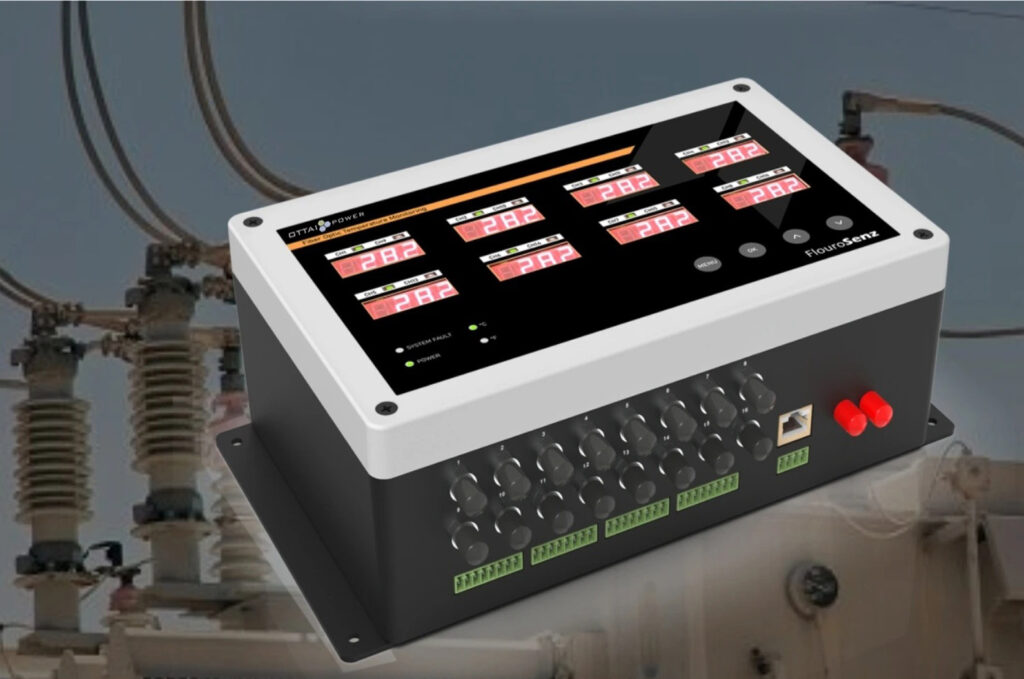
Introduction: Fluorescent optical fiber temperature measurement is a new type of temperature measurement method based on the principles of optical fiber sensing and fluorescence temperature measurement. It uses fluorescent materials doped with rare earth ions as temperature sensors, and calculates the temperature precisely by measuring the fluorescence lifetime. This technology or device is applied in multiple fields such as power systems, petrochemicals, and biomedicine. The sensor usually consists of ST connectors, optical fibers, and the terminal temperature sensing end. Fluorescent optical fiber temperature measurement has the characteristics of high accuracy, resistance to electromagnetic interference, high pressure tolerance, and long lifespan.
1. Background
Temperature is one of the most critical parameters affecting the safety and reliability of electrical equipment. Overheating caused by poor contact, insulation aging, overload, or environmental factors can lead to severe failures, including fires and equipment breakdown.
Fluorescent fiber optic temperature monitoring technology provides high‑accuracy, real‑time, electromagnetic‑immune temperature measurement. It is widely used in high‑voltage equipment, transformers, switchgear, and industrial systems where traditional electrical sensors cannot operate reliably.
2. System Working Principle
– Fluorescent fiber probes are installed at key temperature points.
– A light source excites the fluorescent material inside the probe.
– The fluorescence decay time changes with temperature.
– The optical interrogator converts decay time into temperature values.
– Data is transmitted to the monitoring platform for analysis and alarms.
Simplified System Architecture:
[Fluorescent Fiber Probes] → [Optical Interrogator / Temperature Host] → [Communication Network] → [Monitoring Platform] → [Real‑Time Temperature • Alarms • Trends]
3. System Components
- Fluorescent Fiber Temperature Probes — Immune to EMI, suitable for high‑voltage environments.
- Optical Interrogator (Temperature Host) — Converts fluorescence decay time into temperature readings.
- Fiber‑Optic Cables — Provide safe, passive signal transmission.
- Communication Module — Supports RS485, Ethernet, IEC 61850, or wireless.
- Monitoring & SCADA Platform — Displays real‑time temperature, alarms, and historical trends.
- Mounting Accessories — Probe clamps, sleeves, and protective housings.
4. Key Advantages
- Immune to electromagnetic interference (EMI)
- High accuracy and long‑term stability
- Suitable for high‑voltage and harsh environments
- Real‑time monitoring with multi‑point capability
- No electrical risk — passive optical sensing
- Supports predictive maintenance
- Long service life and low maintenance cost
5. Performance Comparison Table
Parameter | Traditional Electrical Sensors | Fluorescent Fiber Optic Sensors |
EMI Immunity | Low | Excellent |
Safety | Medium | Very High (passive optical) |
Temperature Range | Limited | Wide (‑40°C to 200°C or higher) |
Accuracy | Medium | High |
Installation in HV Areas | Restricted | Fully supported |
Maintenance | Frequent | Minimal |
6. Recommended Applications
- High‑voltage switchgear
- Busbars and cable joints
- Dry‑type transformers
- Oil‑immersed transformers (probe‑based)
- Ring main units (RMU)
- Industrial temperature monitoring
- Smart grid and digital substation systems
7. Conclusion
Fluorescent fiber optic temperature monitoring provides a robust, safe, and highly accurate solution for temperature measurement in demanding electrical environments. Its immunity to electromagnetic interference and suitability for high‑voltage applications make it an essential technology for modern power systems and industrial facilities.
JUST CLICK FOR BEST SOLUTION
Intelligent temperature and humidity control for both high and low temperatures, provider of power safety solutions