
How Do Industrial Dehumidifiers Address The Problem of "Damp"?
Industrial dehumidifiers are specialized devices designed for high-humidity environments. They reduce the moisture content in the air through physical methods and are widely used in basements, warehouses, villas, workshops, and other similar settings. Their core function is to maintain humidity within a reasonable range, preventing problems such as equipment corrosion, product mold, and discomfort caused by excessive humidity. Compared to traditional household dehumidifiers, industrial dehumidifiers are specifically optimized in terms of power, airflow, and filtration capacity, enabling them to meet the dehumidification needs of large areas and high loads.
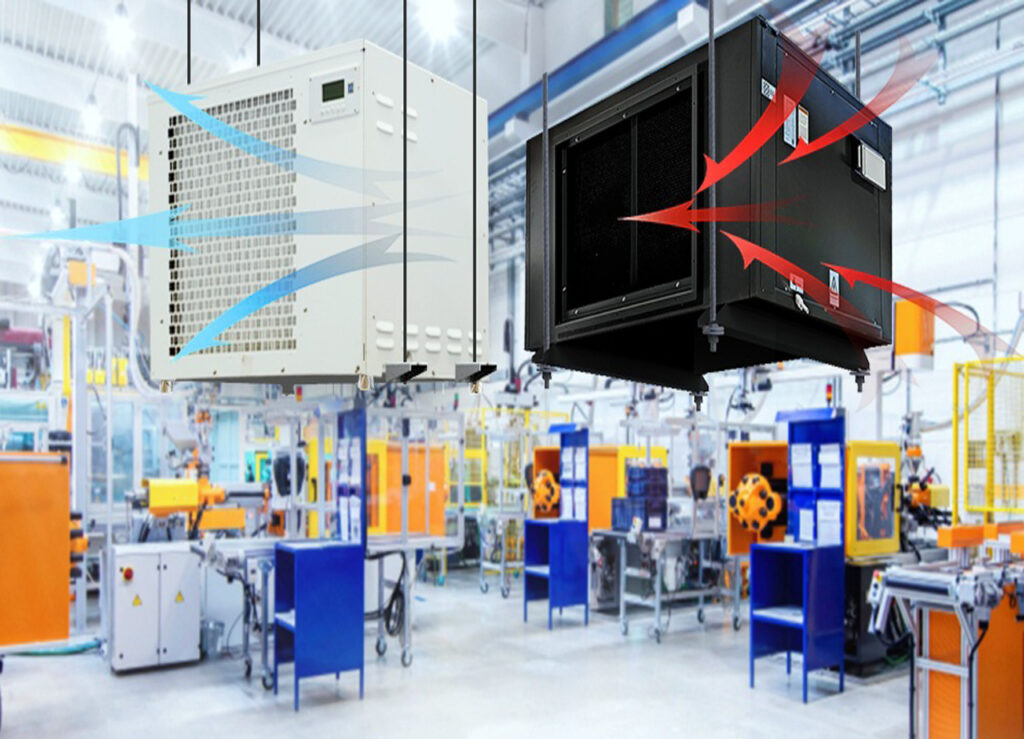
The main pain points of industrial dehumidification stem from the multiple impacts of high humidity environments on production, warehousing, equipment, and product quality. Based on the latest publicly available data (as of 2026), these can be summarized into the following core issues:
1)Decreased Product Yield
Electronics Industry: Moisture-sensitive devices (MSDs) such as PCBs and chips are prone to short circuits or the “popcorn effect” after absorbing moisture, leading to a 15-20% decrease in yield.
Food and Pharmaceutical Industry: The risk of raw material mold growth increases by 2.3-3 times, shortening the shelf life of medicines.
2)Increased Equipment and Material Wear
The corrosion rate of metal parts accelerates by 300%, increasing equipment failure rates.
Paper, fabric, and wood absorb moisture and have a moisture content exceeding the standard by 5-8%, causing deformation, mold, or scrapping.
3)Inefficient Traditional Dehumidification Methods
Air Conditioning Dehumidification: High energy consumption (only about 0.8L of moisture is dehumidified per kWh), efficiency drops sharply in low-temperature environments.
Desiccants/Quicklime: Require frequent replacement, generate dust pollution, and cannot operate continuously. Insufficient Humidity Control Accuracy
Ordinary dehumidifiers have a humidity control accuracy of ±5%, while industries such as electronics and semiconductors require higher accuracy of ±1–2%.
Humidity fluctuates greatly, making it difficult to maintain the optimal 40%–60% RH range.
High Energy Consumption and Maintenance Costs
Industrial dehumidification accounts for up to 40% of the electricity consumption in processes such as lithium battery manufacturing.
Low-priced equipment has a high failure rate and short lifespan, resulting in higher total lifespan costs.
1. Technical principles and core components
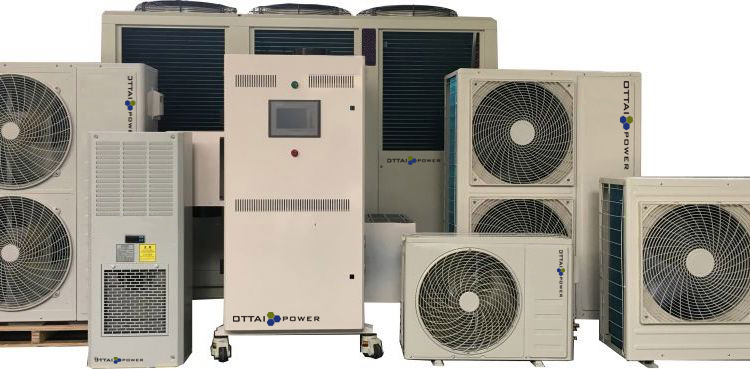
Industrial dehumidifiers operate on the principle of condensation dehumidification technology: air is drawn into the equipment by a fan, first passing through a pre-filter (G4 grade) to intercept large particles such as dust, and then entering the evaporator. At this point, water vapor in the air condenses into liquid water upon cooling and is discharged outside the equipment through a drain pipe. The dried air is then reheated by the condenser and returned to the space, forming a circulation. Some models are also equipped with a medium-efficiency filter (F6-F9 grade) to further filter fine particles and improve air quality. Key parameters of the equipment include airflow (1000~50000 CMH), cooling capacity (5.3KW~270KW), and heating capacity (3KW~81KW), which determine the applicable area and dehumidification efficiency of the equipment.
2. Usage and scenario adaptation
The operation of industrial dehumidifiers requires adjusting parameters based on the humidity, area, and ambient temperature of the space. For example, basements, due to poor ventilation and high humidity, require models with a large airflow (e.g., 20,000 CMH or higher) and matching cooling capacity. When storing moisture-sensitive items in warehouses, the humidification rate (2KG/H~60KG/H) should be considered to avoid excessive dehumidification that could cause items to dry and crack. The equipment’s power supply specification is AC 380 50Hz 3P, suitable for industrial power environments; stable voltage must be ensured during installation. During daily use, the pre-filter should be cleaned regularly (recommended once a month), and the medium-efficiency filter should be replaced every 3-6 months depending on the usage environment to maintain equipment performance.
3. Technical Highlights and Actual Performance
Compared to traditional dehumidification solutions, industrial dehumidifiers offer advantages in efficiency and controllability. Their high-power design (cooling capacity up to 270KW) can rapidly reduce humidity in a space. For example, in a 1000㎡ workshop, a model with a 50,000 CMH airflow can reduce humidity from 80% to 60% within 2 hours. Furthermore, the equipment supports non-standard customization, allowing adjustments to parameters such as airflow and cooling capacity to suit specific scenarios (e.g., adding a heating module for low-temperature environments). Upgraded filtration systems (F6-F9 grade medium-efficiency filters) also expand the equipment’s functionality, enabling it to purify the air while dehumidifying, making it suitable for environments with high air quality requirements, such as villas or laboratories.