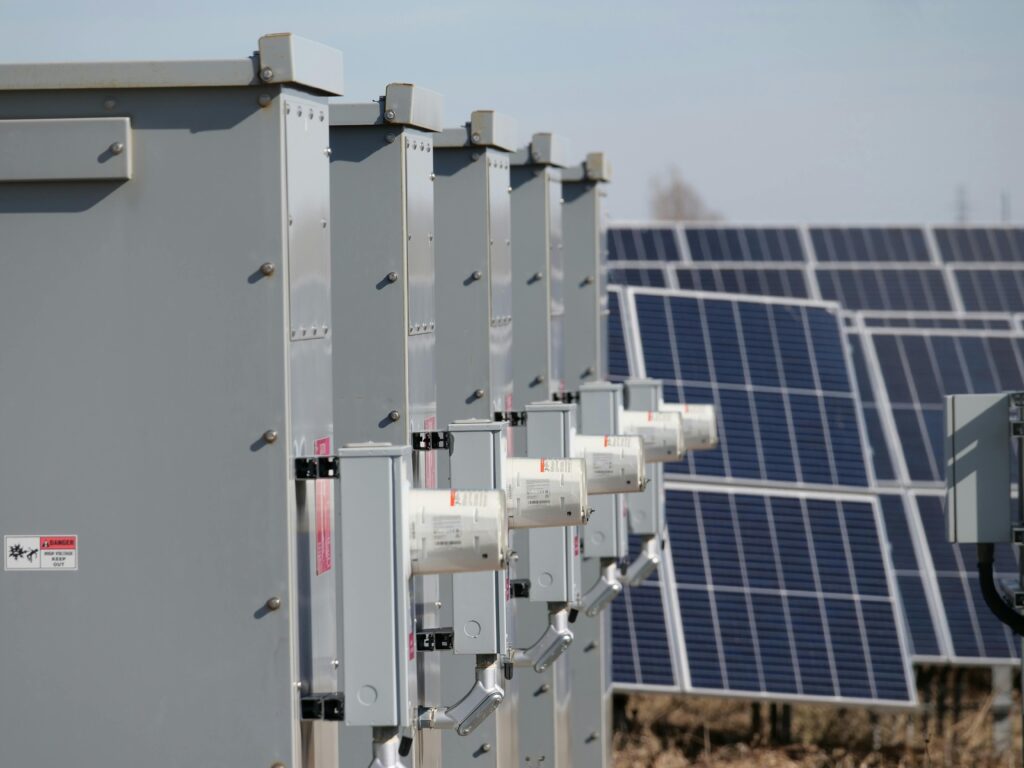
Ring Main Unit Fluorescent Temperature Measurement
Ring Main Unit Fluorescent Temperature Measurement
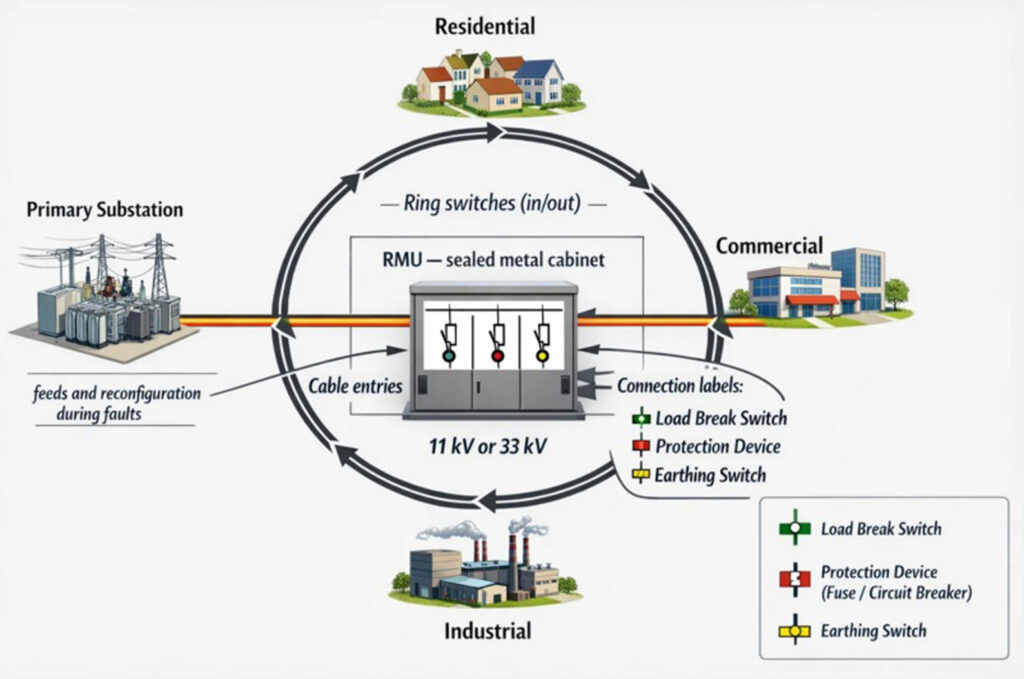
Introduction: Ring main units are mainly installed in the outgoing switch cabinets of ring-shaped distribution networks. The busbars they possess are the main components of the main ring lines. They require low operating costs and have high operational reliability. Their structure is relatively simple, which can have a significant impact on the power supply system. Considering the need for long-term operation of ring main units, due to space limitations and the load-bearing issue, this will lead to certain obstacles in ventilation and heat dissipation, causing the temperature of cable joints to rise abnormally. If not dealt with in time, it may trigger an accident. Therefore, in order to ensure safe operation, it is necessary to pay attention to the reasonable and effective detection of cable joint temperatures.
1. Background
Ring Main Units (RMUs) are widely used in medium‑voltage distribution networks for urban power grids, industrial facilities, commercial buildings, and compact substations. Due to their compact structure and enclosed design, RMUs are prone to overheating at cable terminations, busbars, and switch contacts.
Traditional temperature monitoring methods struggle in RMUs because of limited space, strong electromagnetic fields, and enclosed compartments.
Fluorescent fiber optic temperature monitoring provides real‑time, high‑accuracy, and EMI‑immune temperature measurement, making it ideal for RMU applications.
2. System Working Principle
– Fluorescent fiber probes are installed at cable terminations, busbars, and switch contacts.
– The interrogator excites the fluorescent material and measures fluorescence decay time.
– Decay time is converted into precise temperature values.
– Data is transmitted to the monitoring platform or SCADA system.
– Real‑time alarms and trend analysis support predictive maintenance.
Simplified System Architecture:
[Fluorescent Fiber Probes in RMU] → [Optical Interrogator / Temperature Host] → [Communication Network] → [Monitoring Platform / SCADA] → [Real‑Time Temperature • Alarms • Trends]
3. System Components
- Fluorescent Fiber Temperature Probes — Installed on cable terminations, busbars, and switch contacts.
- Optical Interrogator — Converts fluorescence decay time into temperature readings.
- Fiber‑Optic Cables — Provide passive, safe, EMI‑immune signal transmission.
- Communication Module — Supports RS485, Ethernet, IEC 61850, or wireless.
- Monitoring Platform — Displays real‑time temperature, alarms, and historical trends.
- Installation Accessories — Compact clamps, adhesive pads, insulation sleeves for tight spaces.
4. Key Advantages
- Ideal for compact and enclosed RMU environments
- Immune to electromagnetic interference (EMI)
- High accuracy and long‑term stability
- No electrical risk — passive optical sensing
- Supports multi‑point temperature monitoring
- Enhances RMU safety and reduces failure risk
- Enables predictive maintenance and digitalization
5. Performance Comparison Table
Parameter | Infrared Scanning | Fluorescent Fiber Optic Sensors |
Monitoring Frequency | Periodic | Continuous real‑time |
EMI Immunity | Medium | Excellent |
Accuracy | Medium | High |
Installation in Enclosed RMU | Difficult | Fully supported |
Safety | Medium | Very High |
Maintenance | Frequent | Minimal |
6. Recommended Applications
- RMU cable terminations
- RMU busbars and connectors
- Load break switch contacts
- Compact substations
- Urban distribution networks
- Industrial and commercial MV systems
7. Conclusion
Fluorescent fiber optic temperature monitoring provides a highly reliable and safe solution for RMU temperature measurement. Its immunity to electromagnetic interference and suitability for compact, enclosed environments make it essential for preventing overheating, improving system reliability, and supporting smart grid development.
JUST CLICK FOR BEST SOLUTION
Intelligent temperature and humidity control for both high and low temperatures, provider of power safety solutions