How Does Temperature Affect Transformers?
Power transformers, especially those in power plants and substations, have their own temperature monitoring systems. Overheating will trigger cooling or an alarm.
Ordinary small mains transformers (the kind that hum on utility poles) generally don’t have temperature monitoring, but they do have current monitoring.
Transformers in household appliances also come in many types, but their temperature should generally be below 70 degrees Celsius. How to determine this? Under safe conditions, you can touch it: if your fingers can tolerate the temperature, it’s fine. If your fingers can’t tolerate it, or if touching it produces a sizzling sound accompanied by a scream and the smell of burning protein, then the temperature is too high.
Symptoms of a main transformer overheating: The alarm sounds; the “Main Transformer Overheating” indicator lights up; the temperature gauge reading reaches or exceeds the set value (85℃). Possible causes: Cooling device malfunction; overheating due to overload; temperature gauge malfunction; ambient temperature influence; internal faults (poor contact in the tap changer; short circuit between coil turns; short circuit between silicon steel sheets in the core) causing localized overheating of the transformer. During transformer operation, when heat generation and heat dissipation reach equilibrium, the temperature of each part tends to stabilize. If, under the same conditions, the oil temperature is more than 10°C higher than usual, or the load remains constant but the temperature continues to rise, it can be considered that an internal fault has occurred in the transformer (note whether the thermometer is malfunctioning or has errors). If a cooling device malfunctions or the transformer is overloaded, causing the transformer temperature to exceed the allowable value for a prolonged period, the transformer insulation is prone to damage. This is because insulation ages after prolonged exposure to heat. The higher the temperature, the faster the insulation ages. When the insulation ages to a certain extent, it is prone to rupture and breakdown under the action of operating vibration and electrodynamic forces, causing a fault. When the transformer overheats, the shift operator should reset the alarm. First, check and determine the cause of the overheating. If cooling device malfunction, overload, malfunctioning or excessively high temperature readings, or ambient temperature are ruled out, it can be determined that the overheating is caused by an internal transformer fault. The shift operator should immediately report to dispatch and switch the transformer to maintenance status, awaiting maintenance personnel to handle the situation.
1. Temperature monitoring and control
Normal operating temperature range: For oil-immersed transformers, the winding temperature is typically controlled between 85°C and 95°C. The oil temperature generally does not exceed 95°C.
Over-temperature warning temperature: When the transformer winding temperature exceeds 95°C, or the oil temperature exceeds 95°C, it is considered to have entered an over-temperature state, and immediate measures should be taken for inspection and handling.
2. Ensure that the transformer load does not exceed its rated capacity.
Transformer load monitoring involves real-time acquisition and analysis of key parameters such as current, voltage, temperature, and load rate of the transformer to dynamically track its operating status and prevent equipment damage or power outages caused by overload, overheating, or other abnormal conditions.
Core Monitoring Methods and Technologies
Real-time Data Acquisition
Utilizing TTUs (Transformer Terminal Units) or intelligent monitoring terminals, parameters such as three-phase current, voltage, active/reactive power, and power quality are automatically collected.
Data is uploaded to a cloud platform via the Internet of Things (IoT) for remote real-time viewing and early warning.
Temperature and Hotspot Monitoring
Monitoring the top oil temperature (not exceeding 95℃) and winding hotspot temperature (typically limited to 140℃) to prevent accelerated insulation aging.
For every 8℃ exceeding the rated temperature, the insulation aging rate may double.
Load Current Deviation Early Warning
When the three-phase current deviation exceeds 10%, immediate investigation is required to prevent single-phase overload-induced faults.
For transformers operating in parallel, balanced load distribution must be ensured to prevent “one transformer from bearing all the responsibility.”
Intelligent Analysis and Early Warning System
Utilizing AI algorithms, the system identifies sudden, gradual, and periodic overload characteristics, achieving a prediction accuracy of up to 92%.
The system supports a three-level response mechanism: Primary warning (90% load) → Intermediate alarm (105%) → Emergency power failure (above 120%).
Cooling System Status Monitoring
In the forced oil circulation system, an early warning should be issued when the oil flow rate decreases by 20% to ensure efficient heat dissipation.
3. Cooling system management
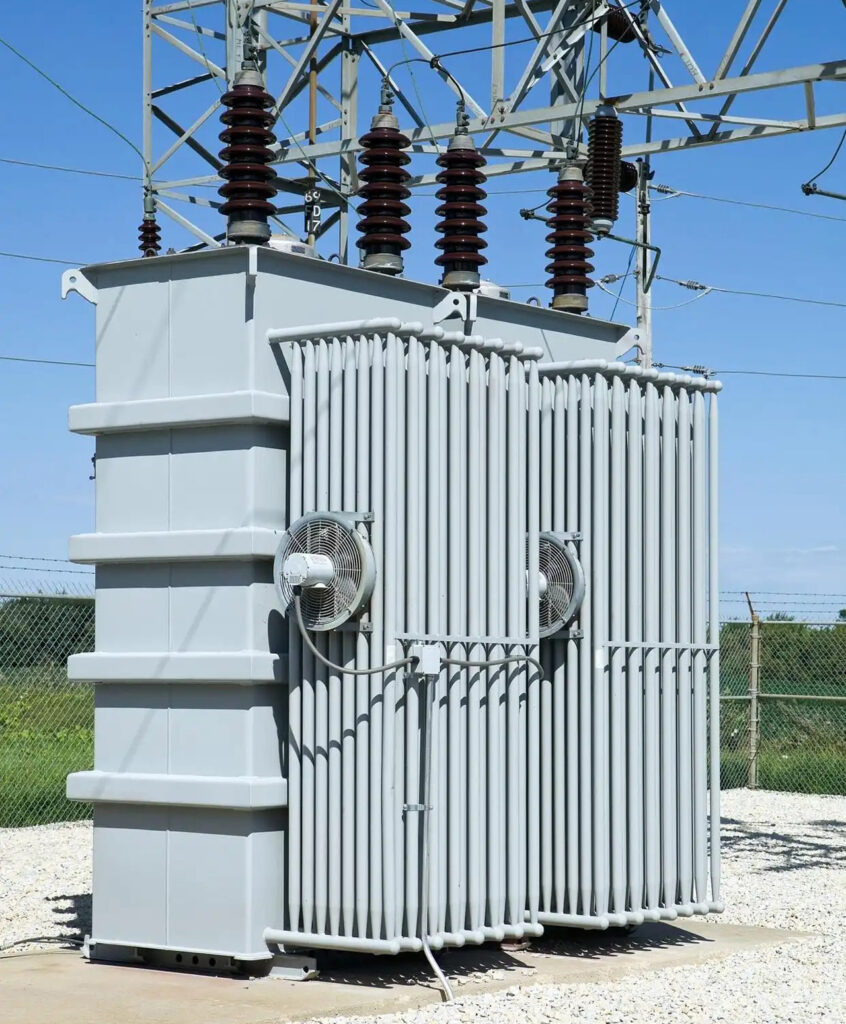
Transformer cooling system management is a core aspect of ensuring the safe, stable, and long-term operation of transformers. Through scientific monitoring, regular maintenance, and intelligent control, it ensures that the heat dissipation capacity always matches the load demand.
1)Core Management Measures for the Cooling System
Real-time Monitoring of Operating Status
Focus on monitoring the upper oil temperature (normally not exceeding 95℃), winding temperature, inlet and outlet temperature difference of the cooler, and oil flow velocity.
When the oil temperature is more than 10℃ higher than under the same load, or continues to rise while the cooling device is functioning normally, it should be considered an internal fault, and the system should be immediately shut down for inspection.
2)Classification and Applicable Scenarios of Cooling Methods
ONAN (Oil-immersed self-cooling): Suitable for small-capacity transformers below 10,000kVA, relying on natural oil convection for heat dissipation.
ONAF (Oil-immersed air-cooled): Adds a fan for forced cooling, increasing cooling efficiency by 150%~200%, used for medium-capacity transformers.
OFAF (Forced oil circulation air-cooled): Forces oil to flow through the radiator via a submersible oil pump, used for large-capacity main transformers.
OFWF (Forced Oil-Water Cooling): Utilizes water as the final cooling medium, offering high heat dissipation efficiency, but requires strict sealing.
3)Power Supply and Redundancy Management
The cooling system should be equipped with dual power supplies (operating + standby). When the operating power supply fails, the standby power supply must automatically activate.
If both power supplies fail, the transformer must be shut down within one hour of the cooling system’s complete shutdown to prevent insulation damage.
4)Water and Oil Quality Management (Water-cooled/Oil-cooled Systems)
The water-cooled system requires maintaining a pH value between 6.5 and 8.5, and a hardness ≤ 5 mmol/L. Corrosion inhibitors should be added regularly to prevent scaling.
The oil-cooled system should have its oil quality tested annually, paying attention to indicators such as moisture content, acid value, and dielectric strength. Degraded oil should be replaced promptly.
5)Daily and Periodic Maintenance
Check the fan and oil pump daily for stable operation and any abnormal noises or vibrations.
Clean the cooler filter monthly to prevent clogging that could affect airflow or water flow. Insulation resistance tests should be conducted annually. Motor insulation should be ≥0.5MΩ and grounding resistance <4Ω.