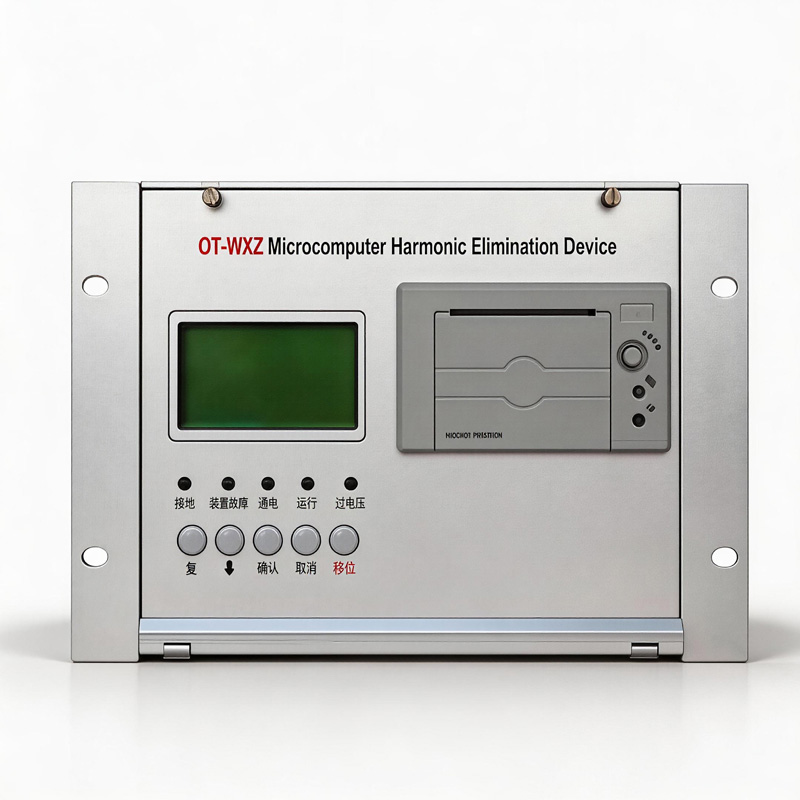
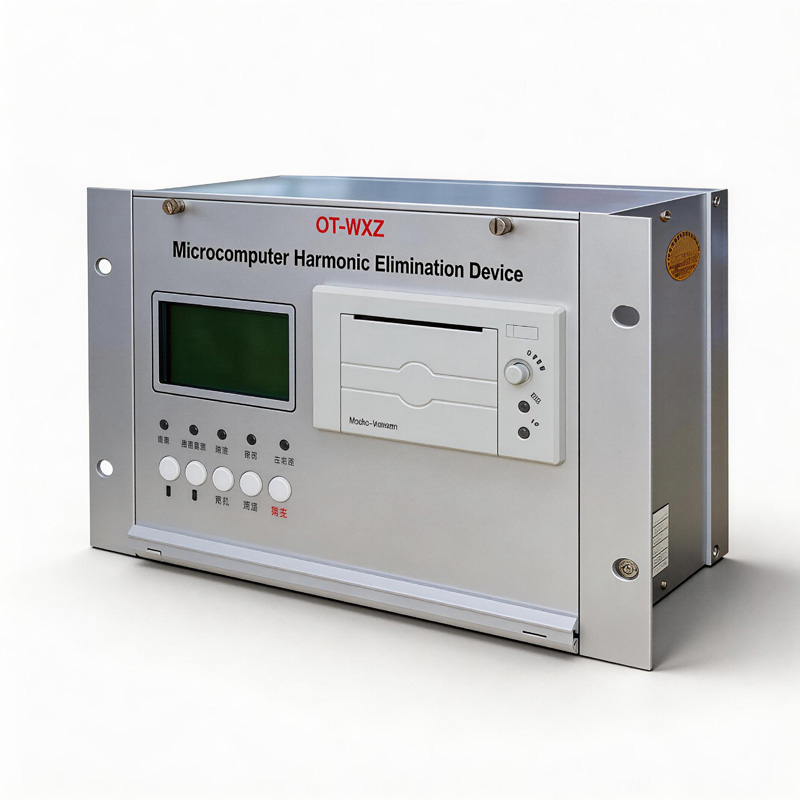
Descripción
Applicable Scope: 3kV–35kV systems.
Harmonic Elimination Channels: 1 channel (2-channel versions available upon request).
Applicable Resonance Frequencies: High-frequency, low-frequency, and power-frequency resonance.
Harmonic Elimination Activation Voltage: 30V for low-frequency resonance; 120V for power-frequency and high-frequency resonance.
Voltage Measurement Accuracy: 2%.
Frequency Measurement Accuracy: ±1Hz.
Alarm Relay Contact Capacity: AC 240V/5A, DC 30V/5A.
Communication Interface: RS485 @ 9600bps.
Power Supply: AC 220V ±10%, DC 220V ±10%.
Ambient Temperature: –10°C to +50°C.
Altitude: Less than 2000 meters.
Operating Temperature: –10°C to +60°C.
Relative Humidity: 90% (at 25°C), 50% (at 40°C).
The installation site must be free from corrosive gases, vapors, and conductive dust; it must also be free from explosive gases and gases that degrade insulation properties.
The installation site must be equipped with facilities for protection against wind, rain, and dust.