
Grid Management in Power-Scarce Regions Matters More Than Ever
Regions facing power scarcity are frequently discussed on global social platforms, especially during heatwaves or economic disruptions. Effective grid management ensures that limited electricity is distributed fairly and efficiently. Advanced load forecasting, renewable integration, and microgrid strategies help stabilize supply in challenging environments. As climate change intensifies, these regions rely heavily on smart grid technologies to avoid blackouts and support essential services. The growing online conversation around energy equity underscores the importance of resilient grid management in underserved areas.
In the past three years, Japan and India have experienced power shortages, while Europe and the United States have faced energy crises, leading to a rapid escalation of the global power shortage. Furthermore, the booming generative AI technology requires massive amounts of electricity, further exacerbating the global power shortage.
Why is there a simultaneous global power shortage? Why are many industry leaders urgently calling for attention to electricity? Power rationing and blackouts have varying degrees of impact on everyone’s lives. So, how should we respond? Perhaps we can find a solution from the perspective of green electricity.
Artificial intelligence technology accelerates global power shortage
This energy crisis is not only related to oil and natural gas, but more importantly, it is due to the surge in energy demand brought about by the technological revolution, specifically the explosive growth in computing power demand caused by artificial intelligence technology. Just how much computing power and energy does AI technology consume? ChatGPT responds to approximately 200 million requests every day, consuming more than 500,000 kilowatt-hours of electricity daily, equivalent to the electricity consumption of 17,000 American households.
Coincidentally, Nvidia founder and CEO Jensen Huang stated that the ultimate goal of AI is solar power and energy storage. We need to consider energy consumption holistically, not just focus on computing power. Adding just computers would burn the energy equivalent of 14 Earths.
China's power grid maintained an unusual calm.
In stark contrast to the United States, China has established a highly efficient collaborative mechanism from project approval to grid connection. This “moderately forward-looking” planning philosophy ensures that grid construction always outpaces demand growth. While Google was told it would have to wait 10 years to connect to the grid, many data centers in China were already operational “on demand.” Morgan Stanley predicts that from 2025 to 2028, the cumulative power shortage for data centers in the United States will reach 47 gigawatts, equivalent to the total electricity consumption of approximately nine Miami cities. In China, however, this problem has been systematically addressed more than a decade earlier.
Ultra-high voltage power transmission – the "highway" of the energy artery.
By the end of 2025, China had built and put into operation 46 ultra-high-voltage (UHV) transmission lines, with a total length of over 62,000 kilometers. These silver giants have a cross-provincial and cross-regional power transmission capacity of 370 million kilowatts, enabling them to efficiently transmit green electricity from western renewable energy bases to eastern computing centers. The transmission distance easily exceeds 2,000 kilometers, and losses are controlled at around 3%.
Energy storage systems – the grid's "stabilizer" and "power bank"
To address the volatility of renewable energy sources like wind and solar power, China has built a diversified energy storage system. By 2025, pumped-storage hydropower will have an operational capacity of approximately 8 million kilowatts, bringing the total capacity to nearly 66 million kilowatts. These giant “power banks” pump water uphill when electricity is plentiful and release it to generate electricity when there is a power shortage, effectively mitigating grid fluctuations.
Chemical energy storage is also rapidly being deployed. Ford has begun converting its idle electric vehicle battery capacity into commercial energy storage system production lines, planning to deploy at least 20 gigawatt-hours of energy storage batteries annually by 2027. China’s deployment in this area is more systematic, with new technologies such as sodium-ion batteries and compressed air energy storage already entering large-scale commercial deployment.
Virtual power plants – the “dispatch brain” of smart grids
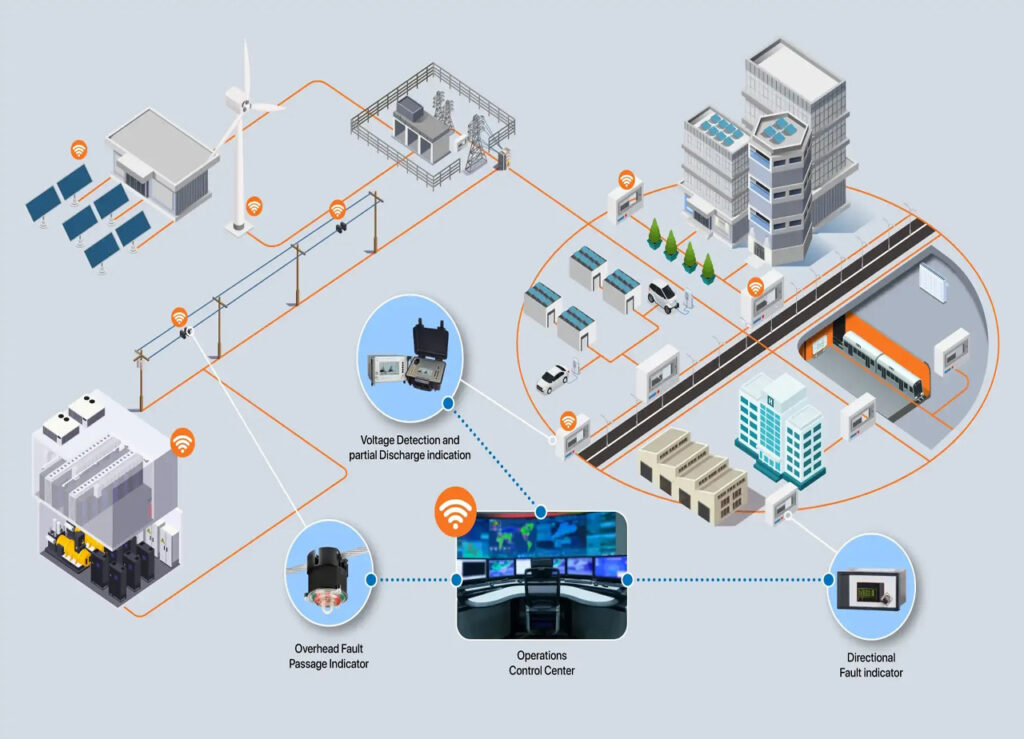
The convergence of digital technologies is making the power grid smarter. China Southern Power Grid has built a smart computing cluster with a total scale exceeding 3000 petabytes and has independently developed a large-scale power model called “Big Watt.” These technologies support a virtual power plant system, which, through digital aggregation of distributed power sources, energy storage devices, and adjustable loads, enables intelligent scheduling and demand response for the entire power system.
In Guangdong and other regions, building air conditioning systems and electric vehicle charging stations in underground parking garages can participate in grid regulation as flexible loads. This shift from “source following load” to “source interacting with load” allows the power system to move from passive supply to active management, providing resilient power security for the energy-intensive AI industry.
Conclusion: A Leap from Oil Hegemony to Electricity Sovereignty
Behind the 10 trillion kilowatt-hours of electricity consumption lies a testament to a nation’s systemic capabilities. From ultra-high-voltage technology to energy storage systems, from virtual power plants to a nationwide smart grid with unified dispatch, China has built a resilient power grid ecosystem capable of simultaneously supporting a massive manufacturing sector and explosive digital economic growth. While other countries are still anxious about the electricity demands of AI, China has elevated this issue to a national strategic level for systematic solutions.