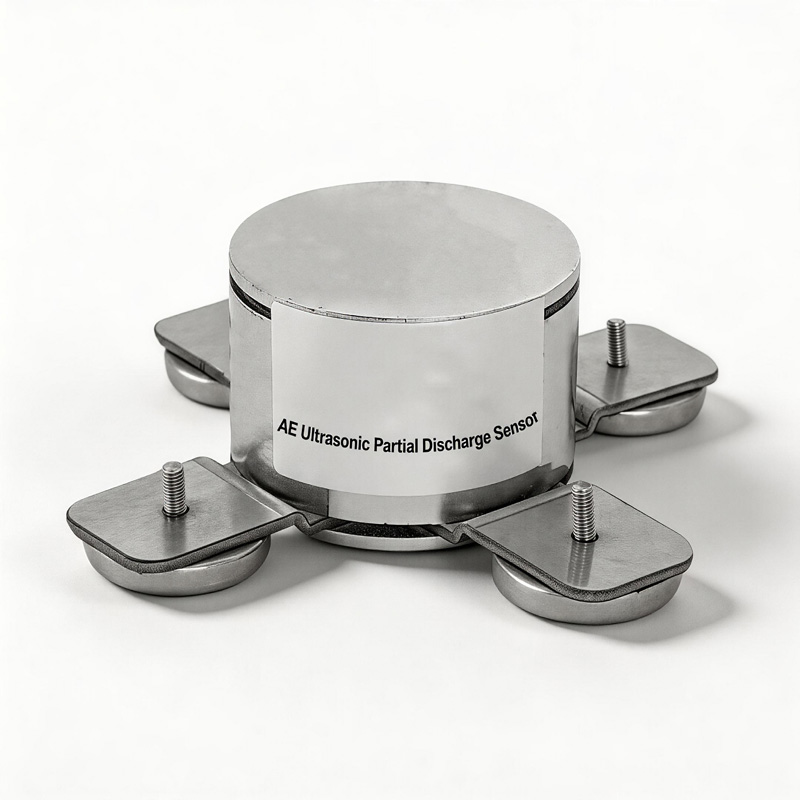
Ultrasonic sensors constitute a critical component of partial discharge ultrasonic detection systems; they are a key factor influencing the system’s overall performance and directly impact the fidelity of the acquired data as well as the accuracy of the data processing results. In ultrasonic detection applications, resonant-type ultrasonic sensors and broadband-response ultrasonic sensors are the most commonly utilized types. The MT-AE series of ultrasonic sensors primarily employs a resonant design; the core components—the piezoelectric ceramic elements—are sourced from imported sensitive materials to ensure their consistency, reliability, and stability.
* The ultrasonic sensor features a frequency band range of 60–400 kHz, with a center response frequency of 150 kHz; this effectively avoids electromagnetic signal interference typically found in high-voltage equipment environments and also facilitates the localization of partial discharge sources.
* An integrated ultrasonic signal preamplifier is built-in, effectively enhancing the sensitivity of ultrasonic detection.
* The advantage of the built-in preamplifier design lies in its simplified wiring and ease of portability.
Detection Range
* For ultrasonic partial discharge detection in SF6 gas-insulated power equipment, the typical detection frequency band ranges from 20 kHz to 80 kHz.
* For ultrasonic partial discharge detection in oil-immersed power equipment, the typical detection frequency band ranges from 80 kHz to 200 kHz.
* For non-contact ultrasonic partial discharge detection, the typical detection frequency band ranges from 20 kHz to 60 kHz.
Technical Specifications
Frequency Range: 60–400 kHz
Resonant Frequency: 150 kHz
Preamplifier: Built-in 40 dB preamplifier
Peak Sensitivity: >-25 dB
Interface Location: Side
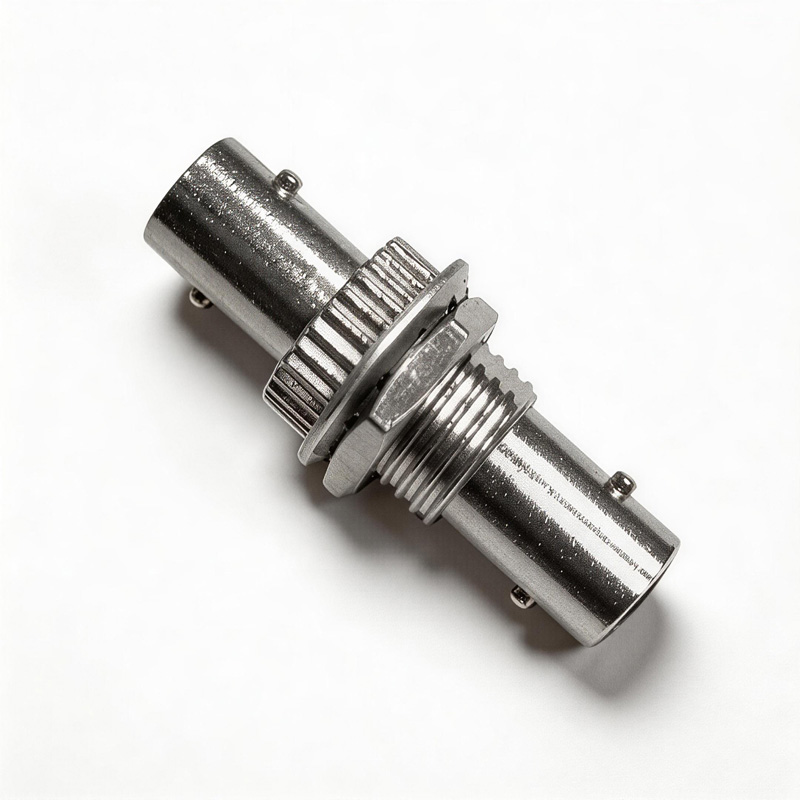
Interface Type: BNC
Dimensions: Φ30 × 36.5 mm
Receiving Surface Material: Ceramic
Protection Class: IP66
Operating Temperature: -20°C to 50°C
Applicable Standards
IEC/TS 62478, Ed.1: High-voltage test techniques — Measurement of partial discharges by electromagnetic and acoustic methods
DL/T 1250-2013: Guidelines for the application of on-line ultrasonic partial discharge detection in gas-insulated metal-enclosed switchgear
DL/T 1416-2015: Technical specifications for on-site partial discharge measurement using the ultrasonic method
Q/GDW 11061-2013: Technical specifications for ultrasonic partial discharge detectors